
Australia Pet Shipping
International Pet Shipping
SHORT ANSWER
Before your dog can fly to Australia, they need a microchip, a rabies vaccination followed by a rabies neutralizing antibody titer test (RNATT) with a mandatory 180-day wait, vaccination or testing for leptospirosis, canine influenza vaccination (if coming from the U.S.), negative test results for brucellosis and leishmaniasis, and both external (tick/flea) and internal (worm) parasite treatments completed on strict timelines. Every one of these steps must be performed by a government-approved veterinarian, and the whole process typically takes six to eight months from start to finish.
Why Australia's Requirements Are So Strict
Australia is one of the few rabies-free countries left in the world, and its Department of Agriculture, Fisheries and Forestry (DAFF) treats every pet import as a potential biosecurity risk. That's why the country requires far more extensive vaccination and testing than most destinations, and why the process is measured in months, not weeks. According to DAFF's own guidance, pet owners should "allow at least 6 months to complete health checks, tests and paperwork" for dogs entering from an approved Group 3 country like the United States (DAFF step-by-step guide).
Step 1: Microchip Before Anything Else
Your dog needs an ISO-compliant microchip implanted and verified before any vaccinations or blood draws happen. Every subsequent vaccination certificate, lab report, and permit must reference this exact microchip number — a single digit discrepancy can delay your entire application. In the U.S., this preparation is coordinated through a USDA-accredited veterinarian, and the USDA APHIS pet travel page for Australia is the official starting point for confirming which vet and paperwork track applies to your dog.
Step 2: Rabies Vaccination and the RNATT Titer Test
This is the step that determines your travel date more than any other.
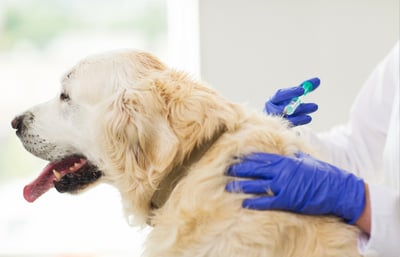
Once your dog is microchipped, a government-approved veterinarian administers a rabies vaccine. Your dog must have been at least 84 days old at the time of vaccination, and the vaccine must remain valid, without lapsing, all the way through to the date of export. Three-year rabies vaccines are acceptable as long as they're given according to the manufacturer's instructions.
Roughly 3 to 4 weeks after vaccination, your vet draws blood for the Rabies Neutralizing Antibody Titer Test (RNATT), which confirms your dog actually developed protective antibodies. The blood is sent to an approved laboratory — in the U.S., that's typically the Rabies Laboratory at Kansas State University — and tested using either a FAVN or RFFIT method. A result of 0.5 IU/mL or higher is a pass; anything lower means starting the vaccination and testing process over.
Here's the part that catches people off guard: your dog cannot be exported to Australia until at least 180 days after the RNATT blood sample arrives at the lab. This waiting period has no exceptions, and the RNATT itself is only valid for 12 months from the blood draw date, so there's a real window you have to hit (DAFF rabies testing requirements).
Step 3: Leptospirosis and Canine Influenza
All dogs from Group 3 countries must either be fully vaccinated against Leptospira interrogans serovar Canicola or test negative for it via a blood test. If you vaccinate, the final dose or annual booster must fall between 12 months and 14 days before export.
If your dog is traveling from the United States (or South Korea), DAFF also requires full vaccination against canine influenza virus (CIV) — a requirement also spelled out on the USDA APHIS Australia page. For a dog with no prior CIV vaccination history, the primary course must be completed at least 14 days before export; for dogs already on a CIV vaccination schedule, boosters must be current per the manufacturer's directions.
DAFF additionally recommends — though doesn't require — vaccinating against distemper, hepatitis, parvovirus, parainfluenza, and Bordetella bronchiseptica, since these diseases are present in Australia and your dog will need protection through the post-entry quarantine period.
Step 4: Blood Tests for Brucellosis and Leishmaniasis
If your dog isn't spayed or neutered, they'll need a negative Brucella canis test using an approved method (RSAT, TAT, or IFAT), completed within 45 days of export. Every dog, regardless of desexing status, also needs a negative Leishmania infantum test using either IFAT or ELISA — rapid or "snap" versions aren't accepted.
Step 5: External and Internal Parasite Treatments
A government-approved vet must treat your dog with a product effective against ticks and fleas on contact, starting at least 30 days before export and repeated as needed to stay effective through the travel date. At every follow-up visit, the vet re-examines your dog for parasites; if any are found, the treatment clock restarts.
Internal parasite treatment (for both nematodes and cestodes) must be given twice within 45 days of export, with the two doses at least 14 days apart and the second dose administered within 5 days of departure.
Step 6: The Final Vet Check and Documentation
Within 5 days of export, your dog needs a final clinical exam confirming they're free of external parasites and signs of infectious disease. Your vet completes the official veterinary health certificate, which then must be endorsed — signed, stamped, and dated in original "wet ink" — by an official government veterinarian, per both DAFF and USDA APHIS endorsement procedures. Copies aren't accepted; the original documents travel with your dog.
What Pet Owners Are Saying
The timelines above aren't just bureaucratic fine print — they shape real moving plans. In a Reddit thread in r/dogs, one user relocating from Maryland to Australia shared exactly how the RNATT titer test drove their schedule:
"The rabies titre needs to be done at least 180 days before your pets can be imported (this is a hard deadline and the most rate-limiting step of the whole process)... The rabies titre test cost us $600 per pet, plus the vet visit fee of $80... The test is taking about 6-weeks turn around time from lab, but they count the 180 days from the date the lab received the sample" (r/dogs discussion).
Planning Your Timeline
Because the RNATT waiting period alone takes 180 days, and the vaccination, permit, and quarantine booking steps stack on top of that, most families should plan for a six-to-eight-month runway before their dog can travel. For a full walkthrough of the entire relocation process, from microchip to quarantine release, see our complete guide to pet relocation to Australia. We've also broken down every individual requirement, including document specifics, on our Importing Pets to Australia resource page.
3-7 days

1. Submit quote
Provide travel details above
< 7 days

2. Onboarding
Provide travel details above
7-20 days

3. Document handling
Provide travel details above
5-10 days before travel
4. Booking request
Provide travel details above
5. Finalized move
Provide travel details above
Timelines for popular countries
Australia
 Australia
High • 6+ months
China
 China
China
High • 6+ weeks
EU
 EU
EU
Standard • 6+ weeks
Hawaii
 Hawaii
Moderate • 6+ weeks
Hong Kong
 Hong Kong
Standard • 6+ weeks
Japan
 Japan
Japan
High • 6+ months
Malaysia
.png) Malaysia
Malaysia
High • 6+ weeks
New Zealand
 New Zealand
High • 6+ months
Philippines
.png) Philippines
Philippines
Moderate • 6+ weeks
Singapore
 Singapore
High • 4+ months
South Korea
 South Korea
Moderate • 6+ weeks
Taiwan
 Taiwan
High • 4+ months
Thailand
 Thailand
Moderate • 6+ weeks
UAE
 UAE
UAE
Moderate • 6+ weeks
United Kingdom
 United Kingdom
Standard • 6+ weeks
Vietnam
 Vietnam
Standard • 4+ weeks
Please Note: This timeline is intended as an estimate. Actual travel timelines may vary depending on flight availability and where your pet currently stands in completing the necessary import requirements for their destination.
Frequently Asked Questions

Talk to our experts
Need help or have questions? Our team is ready to help!

Get a quote →