What Happens When Your Pet Arrives at Heathrow's Animal Reception Centre?
 By Ashley Adkins, Marketing Specialist
UK Pet Shipping
International Pet Shipping
Pet Import UK
United Kingdom
UK
SHORT ANSWER
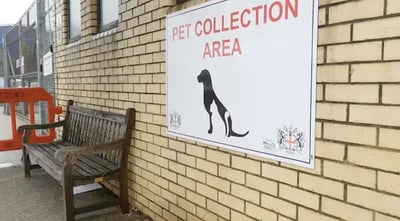
When your pet lands at London Heathrow as manifest cargo, staff from the Heathrow Animal Reception Centre (HARC) collect them from the aircraft in a climate-controlled vehicle and bring them to the HARC facility on Beacon Road. There, your pet settles into its own kennel while HARC staff scan the microchip and check the Pet Travel Scheme paperwork. Once the paperwork passes, your nominated UK agent clears your pet through customs, and on average pets are ready to collect within 2 to 4 hours of arrival. HARC charges £104 to collect your pet from the aircraft plus a boarding fee of £213 (with a paperwork pre-check) or £293 (without one), and £55 for each additional pet. HARC is open 24 hours a day, every day of the year.
Video Walkthrough
Hear the team talk through the answer in one minute.
EXPLORE THIS ARTICLE
- What Is the Heathrow Animal Reception Centre (HARC)?
- How to Pre-Notify HARC and Book the Paperwork Pre-Check Before Your Pet Flies
- Microchip and Document Checks at HARC: What Staff Look For
- How Long Does Heathrow Pet Clearance Take, and What Happens if There Is a Paperwork Problem?
- HARC Fees: What the Heathrow Animal Reception Centre Charges per Pet
- Where and How to Collect Your Pet From Heathrow
- What Pet Owners and Pet Travel Pros Say About Arriving at HARC
- Arriving at Heathrow vs. Transferring Through Heathrow
Key Takeaways
- 1. HARC, run by the City of London Corporation, is the live animal Border Control Post for Heathrow and the only Heathrow facility licensed for all animal species. It handles about 22,000 dogs and cats a year.
- 2. Pets must fly into Heathrow as manifest cargo on an approved airline, and you must appoint a UK customs agent even if you organize everything else yourself.
- 3. A paperwork pre-check before your pet flies lowers the HARC boarding fee from £293 to £213 and catches errors while they can still be fixed at home.
- 4. HARC checks the microchip first. It must be readable and must have been implanted and scanned before the rabies vaccination.
- 5. Paperwork errors are sorted into three categories. A query to your vet costs £99, and a serious error can mean quarantine of up to 4 months or re-export.
- 6. Most pets are collected from HARC on Beacon Road, Hounslow, but pets flying with IAG Cargo, Air India, Lufthansa, El Al, Oman, Turkish or Austrian are handled elsewhere. Bring photo ID, the air waybill, and a lead and collar for dogs.
What Is the Heathrow Animal Reception Centre (HARC)?
The Heathrow Animal Reception Centre is the live animal Border Control Post and Travelers' Point of Entry for Heathrow Airport. It is operated by the City of London Corporation, has served Heathrow since 1977, and describes itself as the only Heathrow Border Control Post licensed for all animal species.
The scale is significant. According to HARC, about 22,000 dogs and cats, 400 horses, 1,000 birds and 100,000 reptiles pass through its care each year. Its core jobs for pet owners are moving animals between the aircraft and the facility, checking non-commercial Pet Travel Scheme (PETS) arrivals for compliance, and confirming that travel crates meet International Air Transport Association (IATA) live animal standards.
HARC is open 24 hours a day, 7 days a week, 365 days a year. You can reach the team on 020 8745 7894/5, and the facility address is Beacon Road, Hounslow, Middlesex, TW6 3JF.
One point that surprises many owners: pets cannot fly into Great Britain in the cabin of a commercial flight. Under GOV.UK rules, pets must travel as cargo on a plane unless you are on a chartered private flight or traveling with a recognized guide or assistance dog. HARC adds that pets flying to Heathrow must be booked as manifest cargo in the hold on an approved airline.
How to Pre-Notify HARC and Book the Paperwork Pre-Check Before Your Pet Flies
The smoothest Heathrow arrivals are set up weeks before the flight. Three things need to be in place before your pet boards.
- A nominated UK agent. Before HARC can release your pet, it must clear UK customs, and that is the job of your UK nominated agent. HARC is clear that airlines and their ground handlers will not let a private importer clear cargo through customs, so you need an agent whether or not you use a full-service pet shipper. HARC recommends working with a member of the International Pet and Animal Transport Association (IPATA).
- A paperwork pre-check. HARC offers a pre-check of non-commercial Pet Travel Scheme documents before the pet flies. Your shipper, exporter or airline can request it on your behalf. For pets leaving the United States, the USDA APHIS UK page advises that HARC pre-checks should be done before USDA endorsement of the health certificate, and questions can go to HARC@cityoflondon.gov.uk.
- A completed pet information sheet. HARC asks owners to fill in its pet information sheet for each pet and attach it to the travel crate. HARC also recommends securing two portions of your pet's usual food to the outside of the crate, plus a collar and lead on the outside of a dog's crate.
The pre-check is worth doing for more than the fee saving. If an error turns up at home, your vet can correct it before the 10-day endorsement window on a non-commercial Great Britain pet health certificate runs out. If the same error turns up at Heathrow, your pet waits in a kennel while HARC contacts the vet.
Also confirm that your pet's movement really is non-commercial. Under the Pet Travel Scheme, the owner or an authorized person must travel within five days of the pet, the consignment can include no more than five pets, and a signed non-commercial declaration is required. If any of those do not apply, your pet falls under the commercial import rules and its checks are carried out by the Animal and Plant Health Agency (APHA) instead of HARC staff.
Microchip and Document Checks at HARC: What Staff Look For
As soon as your pet is unloaded, HARC staff transport them from the aircraft to the facility in one of HARC's climate-controlled vehicles. Each pet is released into its own kennel with fresh water, food and a bedding area. Cats get a litter tray, and dogs get access to an outdoor run. Dog or cat food can only come into the country with your pet if it is commercially packaged and sealed.
The compliance check starts with the microchip. Under the Pet Travel Scheme, the chip should be ISO 11784/5 compliant (15 digits) and must have been implanted and scanned before the rabies vaccination. HARC also has scanners that read AVID (9 digit), FECAVA (10 digit) and Trovan chips.
Staff then work through the paperwork in the order the scheme requires:
- Rabies vaccination. Given after the microchip was implanted and read, when the pet was at least 12 weeks old, and at least 21 full days before arrival. Do note that some manufacturers recommend waiting 30 days.
- Tapeworm treatment (dogs only). Given by a vet using a product containing praziquantel, no less than 24 hours and no more than 120 hours (5 days) before arrival, and recorded in full on the entry document. Dogs arriving from Ireland, Finland, Malta and Norway are exempt.
- The right entry document. Pets from Part 2 listed and unlisted countries need a Great Britain pet health certificate, endorsed by the competent authority in the country of origin. Pets from unlisted countries also need a valid rabies blood test followed by a three-month wait.
HARC lists the most common problems it sees as a missing product name for the rabies vaccine, a microchip reading or implant date that falls after the rabies vaccination, an invalid three-year rabies booster, and an invalid tapeworm treatment. A quick read of your pet's documents for these four issues before departure is time well spent.
Keep in mind that HARC cannot tell you whether a dog would be classed as a prohibited type under the Dangerous Dogs Act. HARC directs owners with breed concerns to contact the police force in the area they are moving to before making travel plans.
How Long Does Heathrow Pet Clearance Take, and What Happens if There Is a Paperwork Problem?
HARC says that on average, pets are ready to collect within 2 to 4 hours from arrival. However, it can take longer if there are any delays or a large number of imports that day. That window covers the trip from the aircraft, the microchip and document check, and customs clearance by your agent. HARC contacts your UK nominated agent once compliance checks are complete, and the agent then arranges customs clearance.
The clock runs longer when paperwork needs attention. HARC sorts non-compliance into three categories:
|
Category |
What it means |
Cost to you |
|---|---|---|
|
Section 1 |
Minor administrative error by the issuing vet. No clarification needed. |
No further action |
|
Section 2 |
An error that requires HARC to contact the issuing vet before release. |
£99 administrative fee |
|
Section 3 |
A serious error, including tapeworm re-treatment or new entry paperwork being needed. The pet could need to serve quarantine or be re-exported. |
Further charges |
A pet that arrives without the correct documents or without proper preparation can be put into quarantine for up to 4 months or sent back to the country it traveled from, and the owner is responsible for any fees or charges. This is why the pre-check described above matters so much. It moves the error check to a point where it can still be fixed at home.
HARC Fees: What the Heathrow Animal Reception Centre Charges per Pet
HARC's handling fees are normally included in the total quote from your pet transport agent. As published by the City of London, they are:
|
HARC fee |
With a paperwork pre-check |
Without a pre-check |
|---|---|---|
|
Collecting the pet(s) from the aircraft |
£104 |
£104 |
|
Boarding, first pet |
£213 |
£293 |
|
Each additional pet |
£55 |
£55 |
|
Total for one pet |
£317 |
£397 |
Those figures cover HARC only. Your overall cost also depends on airline handling fees, the length of the journey, your pet's weight and the size of the crate. Add the UK agent's customs clearance charge, and set aside a buffer for the £99 Section 2 administrative fee in case HARC needs to query your vet. Fees are reviewed periodically, so confirm the current schedule with your agent close to your travel date.
Where and How to Collect Your Pet From Heathrow
Once customs clearance is complete, your agent will tell you your pet is ready. From there you have two options: collect your pet in person, or arrange for your agent or pet transport company to drive your pet straight to your new home.
Where to go. Most pets flying into Heathrow are handled at HARC, which sits on Beacon Road, Hounslow, TW6 3JF, and offers free customer parking. The exception is pets traveling with the following carriers, which HARC lists as handled outside its facility:
- IAG Cargo
- Air India
- Lufthansa
- El Al
- Oman
- Turkish
- Austrian
If your pet is booked with one of these, ask your agent for the exact collection address before you travel. This matches what HARC's own description implies: HARC is the only Heathrow Border Control Post licensed for all species, not the only one at the airport.
What to bring. HARC asks owners to bring photographic ID, the air waybill, and a lead and collar for your dog.
Customs paperwork for movers. If you are relocating to the UK, HARC notes that you may need to apply for Transfer of Residency relief (ToR1). Your agent can tell you whether it applies to your move.
What Pet Owners and Pet Travel Pros Say About Arriving at HARC
For owners, the hardest part of a Heathrow arrival is often the gap between landing and the reunion. One Reddit user who moved from the United States to the UK described the end of the journey in r/ukvisa: "you collect them from animal centre in Heathrow (near T4) after they've been cleared by a UK vet" (r/ukvisa). That sequence of checks first, collection second, is exactly how HARC describes the process.
Adam Melton, VP of Strategic Initiatives at Starwood Pet Travel, says the outcome at Heathrow is usually decided long before wheels-down: "By the time a pet lands at Heathrow, the result is mostly set by the paperwork that left home with them. When the pre-check is done and the UK agent is lined up in advance, HARC can move a pet from the aircraft to the collection door in a few hours. When a microchip date or a tapeworm entry is off, that same pet can sit in a kennel waiting on a vet in another time zone. We treat the pre-check as part of the flight, not an extra."
Arriving at Heathrow vs. Transferring Through Heathrow
This article covers pets whose final destination is the UK. Pets that only change planes at Heathrow on the way to another country follow a different path, with their own handling rules and timing. If your pet is connecting through London rather than ending the trip there, read our guide to layovers and transfers for dogs and cats at Heathrow Airport. If London is your new home, our pet travel to London page walks through the full move from health certificate to front door.
Frequently Asked Questions
What are the Heathrow Animal Reception Centre's opening hours?
+
HARC is open 24 hours a day, 7 days a week, 365 days a year. You can call 020 8745 7894/5.
How long does it take to collect a pet after it lands at Heathrow?
+
HARC says pets are ready to collect within 2 to 4 hours of arrival on average. Paperwork errors that require HARC to contact your vet can extend that time.
How much does HARC charge?
+
HARC charges £104 to collect your pet from the aircraft, plus £213 for boarding if a paperwork pre-check was done or £293 if it was not. Each additional pet costs £55.
Can I clear my pet through UK customs myself at Heathrow?
+
No. HARC states that airlines and their ground handling agents require you to nominate a UK agent and will not allow a private importer to clear cargo through customs.
Can my pet fly in the cabin to Heathrow?
+
No, unless you are on a chartered private flight or traveling with a recognized guide or assistance dog. Pets must travel as cargo, and HARC requires them to be booked as manifest cargo on an approved airline.
What happens if my pet's microchip can't be read?
+
The microchip must be readable for HARC to match your pet to its documents. HARC can read ISO 15-digit chips as well as AVID, FECAVA and Trovan chips, but a chip that cannot be read or matched becomes a compliance problem, so ask your vet to scan it at every visit.
Where do I pick up my pet if I flew with an airline that HARC doesn't handle?
+
HARC lists IAG Cargo, Air India, Lufthansa, El Al, Oman, Turkish and Austrian as handled outside its facility. Ask your UK agent for the collection address before your pet flies.
What should I bring to collect my pet?
+
Photographic ID, the air waybill, and a lead and collar for your dog.
Make this guide about your pet.
Every pet's move is a little different. Pick an AI assistant, hit send, and chat through your pet's breed, your route, and your timeline. You'll land with a checklist made for your move.
AI can get details wrong, and pet import rules change often, so double-check before you travel.
FlightDestinationStatus
SW 101
Ask ChatGPT
Boarding
SW 102
Ask Claude
Boarding
SW 103
Ask Perplexity
Boarding
SW 104
Ask Gemini
Boarding
Copies the message to your clipboard, then opens Gemini so you can paste it
See the message we'll send

About the Author
Ashley Adkins, Marketing Specialist
I've been with Starwood since 2018 and have served a variety of different roles. I began as a Pet Travel Coordinator and am now a Marketing Specialist. I've always been an animal lover and grew up riding horses. I've also worked summers at a local vet hospital. I'm born and raised in Connecticut and love travel, spending time with friends and family, making my own greeting cards, and have a minor addiction to coffee.
Talk to our experts
Need help or have questions? Our team is ready to help!

Get a quote →
Subscribe for Monthly Updates
Subscribe for expert pet travel tips, updates, and relocation guides—delivered to your inbox.