

International Pet Shipping
Pet Relocation

SHORT ANSWER
A professional international pet shipping service protects your pet's welfare mostly in the hours before and after the flight, not during it. The service makes sure your pet meets the federal rules that decide whether an airline can accept them at all: a correctly sized and built crate, food and water offered within four hours of handoff, a signed feeding certificate on the crate, and no sedatives. It also plans the route around temperature limits on the ground, avoids handoffs that stretch out your pet's time in transit, and screens for higher-risk pets like short-nosed breeds before a booking is ever made. On the flight itself, your pet travels under the same airline and IATA standards as every other animal. The difference a good service makes is that your pet arrives at that flight prepared, on time, and inside the legal limits.
What Federal Law Requires Before an Airline Can Accept Your Pet
Most of the welfare protections that matter for a flying pet kick in before the aircraft door closes. In the U.S., the Animal Welfare regulations at 9 CFR Part 3, Subpart A set out how dogs and cats must be handled and transported, and airlines are bound by them as carriers.
A few of these rules shape travel day more than people expect:
Age. Under 9 CFR 2.130, a dog or cat must be at least 8 weeks old and weaned before it can be handed to a carrier. The AVMA's air travel guidance adds that pets should be weaned at least five days before flying.
Drop-off timing. Per 9 CFR 3.14(a), carriers must not accept a dog or cat more than 4 hours before the scheduled departure of its flight, though the carrier and the person consigning the pet can agree to extend that by up to 2 hours.
Feeding and watering certificate. The same section requires written certification, attached to the outside of the crate, that the pet was offered food and water during the 4 hours before handoff. That certificate has to list when the pet was last fed and watered and give feeding and watering instructions for the next 24 hours. Instructions for no food or water are not acceptable unless an attending veterinarian directs it.
Ongoing food and water. Under 9 CFR 3.17, dogs and cats 16 weeks or older must be offered food at least once every 24 hours, younger puppies and kittens at least once every 12 hours, and every animal must be offered water at least once every 12 hours.
A shipping service's first job is making sure none of these details trips up your pet at the counter. A missing certificate or a crate that fails inspection doesn't just delay a trip. It can mean your pet waits in a terminal while the problem gets sorted out.
How the Right Crate Protects Your Pet in the Cargo Hold
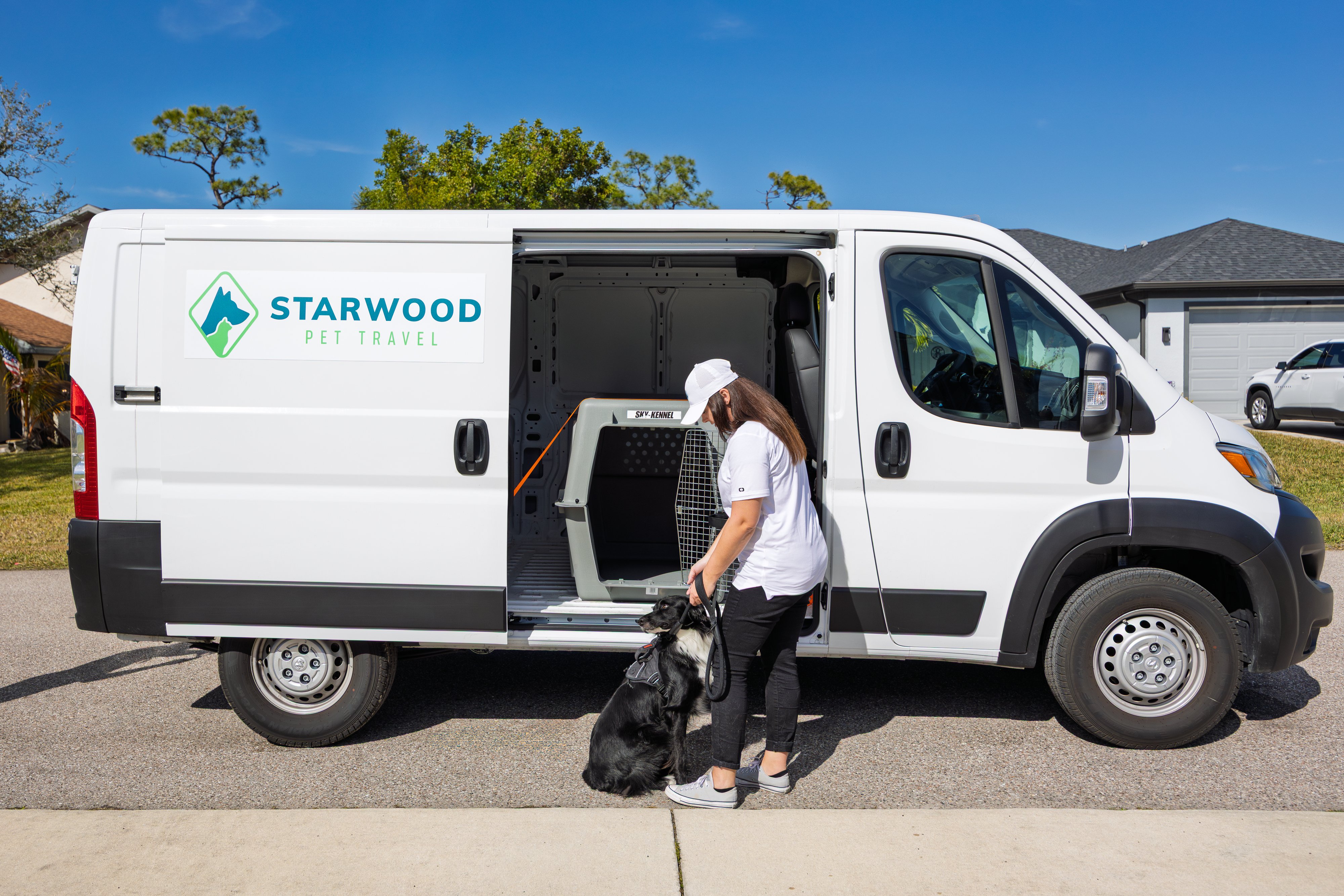
The crate is your pet's entire environment for the length of the journey, which is why federal rules are specific about it. 9 CFR 3.15 requires that a transport crate be strong enough to hold the animal securely through the normal rigors of travel, have no sharp points or edges inside, and have a leak-proof bottom or collection tray.
Size matters just as much. The regulation says each animal must have enough room to turn around normally while standing, stand and sit upright, and lie in a natural position. For air travel specifically, only one dog or cat aged 6 months or older can ride in a single crate.
Internationally, airlines work from the IATA Live Animals Regulations (LAR), which IATA describes as the worldwide standard for transporting live animals by commercial airlines. IATA notes that all its member airlines are expected to follow the LAR, and the current edition took effect January 1, 2026.
This is where an experienced shipper earns its keep. Measuring a pet correctly, choosing a crate that meets both U.S. rules and the airline's LAR-based requirements, and getting the pet comfortable in that crate weeks ahead of time all lower stress on the day it counts.
Why Ground Temperatures Matter More Than Altitude
Most pet owners worry about the flight. The regulations focus heavily on the ground, because that's where exposure risk is highest.
9 CFR 3.20 requires that anyone moving a dog or cat to or from an aircraft or terminal holding area do it "as quickly and efficiently as possible," with shade from direct sun. Pets cannot be exposed to ambient air above 85°F for more than 45 minutes during that movement.
Cold has limits too. Under 9 CFR 3.14(e), a pet in a terminal cannot be held below 45°F for more than 4 consecutive hours, or below 45°F for more than 45 minutes while being moved to or from the aircraft. Airlines can accept a pet into colder conditions only with a veterinarian's acclimation certificate dated no more than 10 days before handoff, and even then those 45°F limits still apply.
For international moves, a shipping service applies this thinking to every airport on the route, not just the departure city. That can mean choosing an evening flight in summer, avoiding a connection through a city in a heat wave, or picking a nonstop route so your pet isn't unloaded and reloaded mid-journey.
Why Pet Shipping Services Don't Sedate Pets for Flights
Many families assume a sedative will make the flight easier. The AVMA advises talking to your veterinarian before giving any tranquilizer or sedative, noting that these drugs "can increase the risk of heart or respiratory problems and generally are not allowed by airlines."
A responsible shipping service will steer you toward crate training and a calm handoff instead. If your pet has an anxiety condition, that's a conversation for your veterinarian well before travel, not something to handle with a pill on the morning of the flight.
Which Pets Face the Highest Welfare Risk in the Air
Not every pet carries the same risk. The AVMA notes that brachycephalic, or short-nosed, pets such as Pugs and Persians "are more at risk than others of overheating or breathing problems during travel, especially air travel."
Many airlines restrict or refuse short-nosed breeds for this reason, and policies differ by carrier and by program (in-cabin, checked, or cargo). A good shipping service flags these risks at the quote stage, checks the specific airline's current policy for the specific route, and tells you honestly if flying is a poor fit. Older pets and pets with heart or respiratory conditions deserve the same early conversation with your vet.
How Carrier Choice Affects What You Can Know About Safety
U.S. airlines report pet incidents to the Department of Transportation under 14 CFR Part 235, which requires monthly reports on any loss, injury, or death of an animal during air transport. That rule has limits worth understanding: it applies to U.S. carriers running scheduled passenger service with at least one aircraft of more than 60 seats. Foreign airlines don't file these reports.
On many international routes, your pet may fly on a non-U.S. carrier for some or all of the trip. That doesn't make those airlines less safe, but it does mean the public DOT data won't tell you much about them. A shipping service that books these routes regularly can speak to how a given airline and its ground handlers actually perform.
What Pet Owners Should Expect From a Shipping Service on Travel Day
Putting all of this together, here is what good welfare practice looks like in real life:
- Your pet is fed and watered on schedule, and the signed certificate is on the crate before you arrive at the airport.
- Drop-off is timed to the 4-hour acceptance window so your pet isn't waiting longer than needed.
- The crate fits your pet and meets both federal rules and the airline's standards.
- No sedatives, unless your veterinarian has made a specific medical decision.
- Routes and flight times are chosen with ground temperatures in mind at every stop.
- You get clear updates, including confirmation when your pet has landed and cleared.
"Most families picture the flight as the scary part, but the flight is usually the calmest stretch of the whole trip," says Georgiana Strait, Marketing Manager at Starwood Pet Travel. "The part that really protects a pet is everything leading up to it: the right crate, the feeding certificate, a drop-off time that doesn't leave them sitting in a terminal, and a route that stays clear of the hottest part of the day. When those pieces are handled well, pets tend to arrive tired but completely fine."
If you want to see what happens once your pet is loaded, our post on what actually happens when your pet flies as cargo walks through the hold itself. For a step-by-step look at planning the whole trip, see How To Ship Your Dog.
Ready to talk through your pet's move? Request a free quote or contact our team.
Frequently Asked Questions

Talk to our experts
Need help or have questions? Our team is ready to help!

Get a quote →