
Can Emotional Support Animals or Service Dogs Move to Australia the Same Way as Pets?
 By Georgiana Strait, Marketing Manager
Australia Pet Shipping
International Pet Shipping
SHORT ANSWER
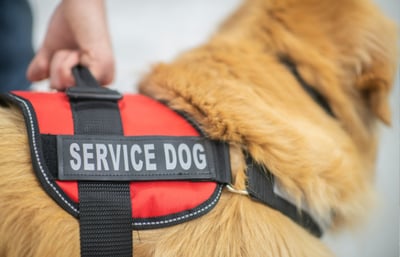
No, and the reasons matter more than the answer itself. Every dog entering Australia, including assistance dogs, must clear the same biosecurity import process required for pet dogs: microchipping, rabies vaccination, the rabies neutralizing antibody titer test (RNATT), the mandatory 180 day wait, parasite treatments, and an import permit. What changes for a true assistance dog is not the biosecurity requirements themselves but the possibility of "reasonable adjustments" to how those requirements are administered, granted case by case under the Disability Discrimination Act 1992. Emotional support animals that have not been professionally trained to perform specific tasks for a person with a disability generally do not meet Australia's legal definition of an assistance dog, so they typically move through the same process as any other companion dog, with no adjustments available.
Video Walkthrough
Hear Georgiana breakdown the key takeaways in 2 minutes.
Requirements at a glance
- Why "Assistance Animal" Status Doesn't Bypass Australia's Biosecurity Rules
- What Counts as an Assistance Dog Under Australian Law
- The Reasonable Adjustments Process for Qualifying Assistance Dogs
- What Evidence You Need to Submit
- New Zealand and Norfolk Island Are the Only True Shortcuts
- What Happens If Your Dog Doesn't Qualify for Adjustments
Key Takeaways
- 1. Australia's Department of Agriculture, Fisheries and Forestry (DAFF) defines an eligible assistance dog under the Biosecurity Regulation 2016 as a dog professionally trained to assist a person with a disability, not simply a dog that provides comfort.
- 2. Reasonable adjustments to the import process are considered individually for qualifying assistance dogs but are never guaranteed and must still satisfy Australia's biosecurity risk requirements in full.
- 3. To apply for adjustments, handlers must submit a completed medical history form from a health practitioner and a training evidence form from a recognized assistance dog training organization, alongside the standard import permit application.
- 4. Assistance dogs coming from New Zealand or Norfolk Island are the only ones exempt from an import permit and post entry quarantine, and even they must still notify the relevant regional DAFF office before arrival.
- 5. If a dog does not qualify as an assistance dog under Australian law, it is offered a standard companion animal import permit instead, with the standard fees, testing timeline, and quarantine period that apply to any pet.
Why "Assistance Animal" Status Doesn't Bypass Australia's Biosecurity Rules
Australia is rabies free, and DAFF treats every incoming dog as a potential biosecurity risk regardless of the role that dog plays in someone's life. That's the starting point for understanding this topic. The government's own guidance is direct: "All assistance dogs coming to Australia must meet import conditions," and this applies both to dogs traveling to Australia from overseas and to Australian assistance dogs returning home (DAFF: Travelling to Australia with an assistance dog).
That means the same foundational steps apply: an ISO compliant microchip, rabies vaccination administered by a government approved veterinarian, the RNATT blood test showing a result of 0.5 IU/mL or higher, and the mandatory 180 day wait after that blood sample reaches an approved laboratory. There is no assistance dog exception to this waiting period. A dog cannot enter Australia faster because it is a service dog or an ESA. The clock is the clock.
What Counts as an Assistance Dog Under Australian Law
This is the distinction that trips up a lot of pet owners, and it's worth being precise about. DAFF states plainly that eligible assistance dogs are "dogs that are professionally trained to assist a person with disability," and that "a medical practitioner must provide evidence that a person needs an assistance dog" (DAFF: Travelling to Australia with an assistance dog).
That definition is built around task training, not companionship. A dog that provides comfort through its presence, without having completed task specific training to mitigate a person's disability, does not meet this bar. This is precisely the gap that comes up again and again in online assistance dog communities, where people asking about emotional support animals in Australia are frequently redirected toward the country's much narrower definition of a trained assistance dog.
If your dog has not completed a recognized training program and does not have documented medical necessity tied to specific tasks, plan on importing it as a standard companion animal. That is not a lesser path. It simply means the full pet import timeline and fee structure apply, the same as it would for any family dog moving to Australia.
The Reasonable Adjustments Process for Qualifying Assistance Dogs
For handlers whose dogs do meet the legal definition, DAFF will consider reasonable adjustments to the import permit process under the Disability Discrimination Act 1992. But the department is explicit that "any reasonable adjustments provided will need to ensure biosecurity risk is adequately managed," and that adjustments are assessed individually, "unique to each individual handler's application" (DAFF: Travelling to Australia with an assistance dog).
Critically, qualifying for consideration doesn't mean the underlying biosecurity steps disappear. Handlers "must also meet all standard import conditions to be eligible for any reasonable adjustments," and if a dog arrives non-compliant with any condition, previously granted adjustments can be revoked, with the dog directed into the standard quarantine facility or re-exported at the owner's expense. This is not a fast lane. It's a process for adjusting how conditions are administered around a documented disability, not a waiver of the conditions themselves.
What Evidence You Need to Submit
Handlers applying for adjustments need two separate forms, both submitted alongside the standard import permit application in DAFF's Biosecurity Import Conditions System (BICON):
A medical history form, completed by a general practitioner, medical specialist, or clinical psychologist, documenting the handler's medical need for an assistance dog. DAFF notes that in-depth details of the disability itself are not required.
A training evidence form, completed by a representative of the training institution, showing the dog's certification. DAFF accepts training records from international bodies like Assistance Dogs International (ADI) or the International Guide Dog Federation (IGDF), from an Australian state or territory's recognized accrediting authority, or from other organizations that can supply documented training records.
DAFF assesses training certificates for suitability on a case by case basis when the import permit application is reviewed, and approval of adjustments is never guaranteed just because paperwork is submitted.
New Zealand and Norfolk Island Are the Only True Shortcuts
There is one meaningful exception in the entire framework, and it's narrow. Assistance dogs traveling from New Zealand or Norfolk Island do not need an import permit at all, and they skip post entry quarantine on arrival. Handlers in this specific situation can also request adjustments like in cabin travel or waived fees, but this is done directly with the relevant regional DAFF office by email before arrival, not through the standard BICON process used for every other country (DAFF: Travelling to Australia with an assistance dog).
For any dog coming from the United States or other Group 3 countries, this exception does not apply. The full permit, testing, and quarantine framework is in effect.
What Happens If Your Dog Doesn't Qualify for Adjustments
If DAFF determines a dog doesn't meet the legal threshold for assistance dog adjustments, or if a handler simply doesn't have the documentation to support an application, the dog isn't turned away. It's offered a standard import permit for companion animals instead, which carries the usual fees and charges for on arrival assessment and post entry quarantine. In practice, this is the pathway most emotional support animals will need to use, since ESAs are typically not trained to perform specific disability related tasks in the way Australia's legal definition requires.
As Adam Melton, VP of Strategic Initiatives at Starwood Pet Travel, puts it: "The families who get tripped up here are the ones who assume 'assistance animal' is a broad, self declared category like it can be in parts of the US. Australia's definition is narrow and task based, and it's tied to documentation from a training organization and a health practitioner, not a letter from a vet or a vest purchased online. Know which category your dog actually falls into before you build your timeline around it."
What Pet Owners Are Saying
This exact confusion shows up often in assistance dog communities online. In a thread on r/service_dogs, one handler preparing to travel to Melbourne with an ADI trained mobility dog described the uncertainty clearly: "I'm hoping to get some info on Australia's laws surrounding AD's, I've been trying to research but haven't really found a clear answer... I believe I read that there's a quarantine time and I'm super nervous about that... It's a 10 day quarantine I think but I'm hoping to stay for around a month and then island hop to New Zealand, would my AD have to be quarantined again?" (r/service_dogs discussion).
That uncertainty around quarantine length is common, and it underscores why documentation matters so much here. The 10 day minimum quarantine (rather than the standard 30 day minimum) is only available if a dog's identity was verified by an official government veterinarian before the RNATT blood draw, a step that applies to assistance dogs and pets alike.
Planning Your Timeline
Whether your dog qualifies as an assistance dog under Australian law or moves through the standard companion animal pathway, the timeline is built around the same milestone: the RNATT blood sample and the 180 day wait that follows it. Handlers pursuing reasonable adjustments should start that conversation with DAFF as early as possible, since the adjustment application runs in parallel with, not instead of, the standard veterinary preparation timeline. For a full walkthrough of the biosecurity requirements every dog must meet before departure, see our guide on vaccinations and treatments dogs need before flying to Australia. If you're still deciding how to structure the move itself, our guide on choosing a pet relocation company for a US to Australia move covers what to look for in a partner who can help manage both the biosecurity paperwork and any adjustment requests.
Frequently Asked Questions
Does my dog need to be certified to qualify as an assistance dog in Australia?
+
DAFF requires evidence of professional training from a recognized organization, such as Assistance Dogs International, an Australian state or territory accrediting authority, or another organization that can supply documented training records, along with a medical history form from a health practitioner. Self certification or a purchased vest is not accepted as evidence.
Can an emotional support animal get a shorter quarantine stay in Australia?
+
Not because of its ESA status. The reduced 10 day quarantine option is tied to pre-RNATT identity verification by an official government veterinarian, and it's available to any dog, pet or assistance dog, that completes that specific step.
Will my assistance dog be allowed to fly in the cabin to Australia?
+
For dogs coming from Group 3 countries like the United States, dogs generally travel as manifested cargo, not in the cabin. In cabin travel as a reasonable adjustment is specifically mentioned for assistance dogs traveling from New Zealand or Norfolk Island, not for the standard international import pathway.
What if DAFF decides my dog doesn't qualify as an assistance dog?
+
You'll be offered a standard import permit for companion animals, with the usual fees and the standard quarantine period. Your dog is not barred from moving to Australia. It simply moves through the same process as a pet dog.
Do reasonable adjustments remove the 180 day RNATT waiting period?
+
No. The 180 day wait after the RNATT blood sample reaches an approved laboratory applies to every dog entering Australia, assistance dog or otherwise. Reasonable adjustments affect how the process is administered, not the underlying biosecurity science.
Where do I start the application for reasonable adjustments?
+
Applications go through DAFF's Biosecurity Import Conditions System (BICON). Search for "Assistance Dog" and your country of export, review the import conditions, and submit your permit application along with the medical history and training evidence forms.
Make this guide about your pet.
Every pet's move is a little different. Pick an AI assistant, hit send, and chat through your pet's breed, your route, and your timeline. You'll land with a checklist made for your move.
AI can get details wrong, and pet import rules change often, so double-check before you travel.
FlightDestinationStatus
SW 101
Ask ChatGPT
Boarding
SW 102
Ask Claude
Boarding
SW 103
Ask Perplexity
Boarding
SW 104
Ask Gemini
Boarding
Copies the message to your clipboard, then opens Gemini so you can paste it
See the message we'll send

About the Author
Georgiana Strait, Marketing Manager
Georgiana Strait is a marketing manager at Starwood Pet Travel, where she leads content strategy, SEO, paid media, and marketing automation across the company's international pet relocation services. A performance-driven digital marketing strategist with a background in customer acquisition and data analytics, Georgiana brings a sharp, iterative approach to building out Starwood's marketing infrastructure, from AI search visibility to lifecycle campaigns. She's also a U.S. Army veteran. Outside of work, Georgie is an avid traveler who has hiked to Everest Base Camp. She lives with her cat, Lavender.
Talk to our experts
Need help or have questions? Our team is ready to help!

Get a quote →
Subscribe for Monthly Updates
Subscribe for expert pet travel tips, updates, and relocation guides—delivered to your inbox.