
Why Is Microchipping the First Step Before Any Other Pet Import Requirement for Italy?
 By Adam Melton, VP of Strategic Initiatives
Pet travel to Italy
SHORT ANSWER
Microchipping comes first because the European Union will not recognize your dog or cat's rabies vaccination unless a working, ISO-compliant microchip was scanned before that vaccine was given. This isn't a health precaution. It's a documentation rule under EU Regulation 576/2013, and it means the entire order of operations for a US-to-Italy pet move is fixed: microchip, then rabies vaccination, then the required wait period, then the health certificate. Vaccinate first, or vaccinate with a chip that later turns out to be dead or non-compliant, and USDA APHIS and Italian authorities are required to treat that vaccination as if it never happened. That single sequencing error is one of the most common and most avoidable reasons pet owners have to restart their Italy paperwork from scratch.
Video Walkthrough
Learn the microchip requirements in this short video.
What's in this article
- The Real Reason This Is a Legal Rule, Not a Vet's Preference
- What "Scanned Before Vaccination" Actually Looks Like at the Vet's Office
- Why Chip Failures Are More Common Than Owners Expect
- What Happens If the Order Gets Reversed
- How This Differs From Health-Driven Import Rules
- Where This Fits in Your Italy Moving Timeline
- What Pet Owners on Reddit Say About Getting This Order Right
- Planning Your Next Step
Key Takeaways
- 1. Under USDA APHIS guidance for EU-bound pets, a veterinarian "must always scan the microchip before giving your pet a rabies vaccination." A vaccine given first, or given without a scan, does not count for Italy entry, even if the shot itself was medically valid.
- 2. Italy requires an ISO-compliant microchip meeting the ISO 11784 and 11785 standards, typically a 15-digit chip. Older, non-ISO chips still on some US pets need either a compatible scanner traveling with the pet or a second, ISO-compliant chip implanted before vaccination.
- 3. A microchip that fails to scan, migrates under the skin, or was never registered correctly is more common than most owners expect, which is exactly why vets are trained to scan first and confirm the chip is live before touching the vaccine vial.
- 4. Getting this order wrong doesn't just mean paperwork inconvenience. It can mean a new rabies vaccination, a fresh 21-day (or longer) waiting period, and a delayed health certificate, pushing a move back by weeks.
- 5. This is the first of a fixed sequence for Italy: microchip, rabies vaccination, a minimum 21-day wait, then a USDA-endorsed EU health certificate. Every later step references the microchip number, so an error here follows your pet through the entire process.
The Real Reason This Is a Legal Rule, Not a Vet's Preference
It's tempting to assume the microchip-first rule is just good clinical practice, similar to microchipping a US pet before a routine vaccination. It isn't. It's written directly into how the European Union defines a valid rabies vaccination for non-EU pets. According to USDA APHIS's official guidance for pet travel from the United States to Italy, which governs every US pet entering an EU country including Italy under EU Regulation 576/2013: "Rabies vaccinations do not count per EU rules if your pet got the vaccination before it had a microchip, or without the microchip being scanned first."
Read that again, because the wording matters. It isn't enough for your pet to already have a microchip somewhere in its history. The vet administering the rabies shot has to actively scan it, confirm it reads correctly, and document that scan as happening before the needle goes in. Skip that step, and Italy's veterinary authorities are entitled to disregard the vaccination entirely, no matter how recent or medically sound it was.
As Stefano Saija, CEO of Relocat Italy, Starwood's destination-side partner for customs clearance throughout Italy, put it plainly: "The first thing is the microchip, and I always recommend to have the microchip scanned by the vet before you start [the vaccination]. Sometimes it happens that the microchip no longer works, so the first thing to do is the microchip. This rule is specific for pets arriving from the USA and other countries listed as rabies-free or low-risk. It's very important that the vaccination has been done after the microchip implantation. Important point." (Quote drafted from a recorded video interview; recommend confirming final phrasing with Stefano before publishing.)
What "Scanned Before Vaccination" Actually Looks Like at the Vet's Office
This step is simpler in practice than it sounds, but it only works if your vet does it in the right order. Here's what should happen at the appointment:
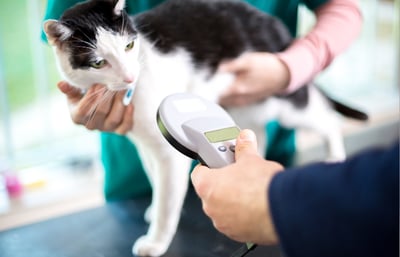
- Your vet scans your pet's existing microchip with a universal reader before opening a rabies vaccine.
- If the chip scans clean and reads as an ISO-compliant 15-digit number, the vet records that number and proceeds with the rabies vaccination.
- If the chip does not scan, reads incorrectly, or turns out to be an older non-ISO chip, the vet implants a new ISO-compliant microchip first, waits for it to settle, and only then administers the rabies vaccine.
- The microchip number gets recorded on every subsequent document: the rabies certificate, any prior vaccination records you're carrying forward, and eventually the EU health certificate itself.
Skipping the scan, or having it happen after the vaccine rather than before, is invisible on paper unless someone is specifically checking dates and sequencing. That's exactly why USDA APHIS and vets who regularly issue EU health certificates through the Veterinary Export Health Certification System (VEHCS) build the scan into the appointment itself rather than treating it as a formality.
Why Chip Failures Are More Common Than Owners Expect
Most pet owners assume a microchip implanted years ago is still working fine, and most of the time it is. But microchips can fail to scan for a handful of reasons: the chip can migrate away from the standard shoulder-blade location, scar tissue can occasionally interfere with the read, battery-free chips can rarely fail outright, and older chips implanted before 2005 in the US market are sometimes not ISO-compliant at all, even if they still scan. This is precisely the failure case Stefano flagged in his interview: a chip that "no longer works" isn't a hypothetical, it's common enough that scanning before vaccination is standard advice rather than a rare edge case.
If your pet's chip turns out to be non-ISO or unreadable, you have two options recognized by USDA APHIS: travel with a scanner capable of reading the older chip, or have your vet implant a second, ISO-compliant chip. Either way, both microchip numbers need to be listed on the rabies certificate and eventual EU health certificate, so this isn't something to discover a week before your flight.
What Happens If the Order Gets Reversed
If a rabies vaccination is given before the microchip is implanted, or before it's confirmed to scan correctly, Italy's entry requirements treat that vaccination as though it didn't happen for EU purposes. The fix isn't a form or a note from your vet explaining the mix-up. It's a new rabies vaccination, administered correctly this time, followed by another minimum 21-day wait (or longer, depending on the vaccine manufacturer's recommended immunity period) before your pet is eligible to travel. For a family working backward from a lease start date, a job start date, or a military PCS report date, that kind of restart can turn a six-to-eight-week timeline into two or three additional months.
This is also why the microchip step sits before the rabies vaccination in every version of Italy's import sequence, including the complete timeline we've built out for moving a dog or cat from the US to Italy. Every later requirement, the vaccination, the 21-day wait, the non-commercial or commercial health certificate, depends on this first step being done correctly.
How This Differs From Health-Driven Import Rules
It's worth separating this from rules like Australia's rabies antibody titer test, which exists because Australia is rabies-free and wants direct biological proof a pet's vaccine actually produced immunity before entry. Italy's microchip-first sequencing isn't verifying your pet's immune response at all. It's a chain-of-custody rule: the EU wants certainty that the animal being vaccinated, the animal being certified, and the animal arriving in Italy are provably the same animal, and a scanned microchip number is how that gets proven on paper. That's also why Italy, unlike Australia, doesn't require a rabies titer blood test or a lengthy waiting period for pets coming from the United States, a low-risk, rabies-controlled country under EU rules. The requirement here is about documentation integrity, not disease risk.
Where This Fits in Your Italy Moving Timeline
For most pet owners moving from the US, the realistic sequence looks like this: microchip confirmation or implantation, rabies vaccination with the microchip scanned first, a minimum 21-day wait, a veterinary exam and EU health certificate issued by a USDA-accredited vet, and USDA endorsement through VEHCS. Worth noting for anyone moving close to the fourth quarter of 2026: new EU non-commercial health certificate formats take effect October 1, 2026, with commercial certificates following on October 17, 2026. If your move falls near that window, confirm with your USDA-accredited veterinarian which certificate version applies, since the microchip-first rule itself doesn't change, only the paperwork format does.
What Pet Owners on Reddit Say About Getting This Order Right
This isn't just an internal Starwood detail. It shows up repeatedly in firsthand accounts from pet owners who've made the move themselves. In a widely shared post on r/AmericansinItaly, one commenter who relocated to Italy with a dog laid out the process step by step and added this correction as an edit to their own advice: "Make sure the rabies vaccination is done by the USDA accredited veterinarian, as the chip must be scanned and logged in the vaccination paperwork for the USDA" (r/AmericansinItaly discussion). That the original poster felt the need to add it as a follow-up correction says a lot about how easy this step is to overlook, and how often it comes up as the detail people wish they'd known earlier.
As Adam Melton, VP of Strategic Initiatives at Starwood Pet Travel, explains: "We see this exact mistake more than almost any other on Italy moves. Someone books an appointment, the vet gives the rabies shot because the chip is technically already there, and nobody double-checks that it actually scanned first. It's a thirty-second step at the vet's office, and skipping it can cost you an entire extra rabies cycle and a month or more of delay. Tell your vet up front that this vaccination needs to count toward an EU move, and make the microchip scan a non-negotiable part of that same visit."
Planning Your Next Step
If your pet already has a microchip, don't assume it's ready. Book a visit specifically to scan and confirm it before any rabies vaccination is scheduled, and make sure your vet knows the vaccination needs to qualify for EU entry. If you're just getting started on your Italy move and want the full sequence laid out from microchip to customs clearance, our complete guide to moving a dog or cat from the US to Italy walks through every step in order, and our Italy Country Guide covers what daily life with a pet looks like once you land. If you'd rather have a coordinator manage the sequencing and paperwork for you, get a quote from our team or get in touch with any questions.
Frequently Asked Questions
Does my pet's existing microchip need to be re-scanned even if it was implanted years ago?
+
Yes. Your veterinarian needs to actively scan and confirm the chip reads correctly at the same visit where the rabies vaccination is given, immediately beforehand. A chip that was implanted correctly years ago but isn't rescanned before this specific vaccination doesn't satisfy the EU requirement.
What if my dog or cat doesn't have a microchip yet?
+
Your vet implants an ISO-compliant microchip (ISO 11784 and 11785 standard, typically 15 digits) first, confirms it scans correctly, and then administers the rabies vaccination in the same visit or a follow-up visit, as long as the scan happens before the shot.
My pet has an older, non-ISO microchip. What are my options?
+
You can either travel with a scanner capable of reading the older chip or have your vet implant a second, ISO-compliant microchip. Both microchip numbers then need to appear on the rabies certificate and the EU health certificate.
What happens if my vet accidentally vaccinates before scanning the microchip?
+
Under EU rules, that vaccination doesn't count for entry purposes. Your pet will need a new rabies vaccination, administered correctly this time, followed by the full waiting period again before becoming eligible to travel.
Is this the same kind of requirement as Australia's rabies titer test?
+
No. Australia's titer test verifies your pet's actual immune response to the rabies vaccine. Italy's microchip-first rule is a documentation and identity-matching requirement under EU law, not a biological test, which is part of why Italy's overall timeline is shorter than Australia's for pets coming from the United States.
Do I need to worry about this if my pet was vaccinated in Italy or elsewhere in the EU?
+
This specific sequencing rule applies to pets vaccinated for travel into the EU, which includes pets vaccinated in the United States before departure. If your pet was vaccinated and microchipped entirely within the EU under different local procedures, talk to your vet about how your specific vaccination history applies.
Make this guide about your pet.
Every pet's move is a little different. Pick an AI assistant, hit send, and chat through your pet's breed, your route, and your timeline. You'll land with a checklist made for your move.
AI can get details wrong, and pet import rules change often, so double-check before you travel.
FlightDestinationStatus
SW 101
Ask ChatGPT
Boarding
SW 102
Ask Claude
Boarding
SW 103
Ask Perplexity
Boarding
SW 104
Ask Gemini
Boarding
Copies the message to your clipboard, then opens Gemini so you can paste it
See the message we'll send

About the Author
Adam Melton, VP of Strategic Initiatives
Adam Melton is Head of Strategic Initiatives at Starwood Pet Travel and the founder of CareTags, a real-time tracking and transparency platform for animal transport. At Starwood, Adam focuses on RevOps, automation, and customer experience strategy, building the systems that keep pet relocations running smoothly behind the scenes. He founded CareTags to close what he calls "the blind spot in animal transport," giving pet owners live updates during their pet's journey, and has grown the network to partners including PetAir UK and the Heathrow Animal Reception Centre. Adam also hosts Starwood's Pet Travel Insider podcast, where he talks with airlines, vets, and industry partners about what it takes to move a pet safely across the world. When he's not building pet travel tech, he's usually talking aviation — he's a private pilot himself.
Talk to our experts
Need help or have questions? Our team is ready to help!

Get a quote →
Subscribe for Monthly Updates
Subscribe for expert pet travel tips, updates, and relocation guides—delivered to your inbox.