
What Does Daily Life Look Like for a Dog Relocated to Italy?
 By Adam Melton, VP of Strategic Initiatives
Pet travel to Italy
SHORT ANSWER
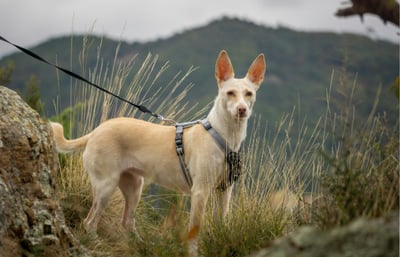
Daily life with a dog in Italy tends to be more social and more active than it is in the United States. Most Italians live in apartments rather than houses with yards, so dogs get walked multiple times a day out of necessity, and those walks double as social time in piazzas and neighborhood parks. Cafes, restaurants, and small shops generally welcome dogs, though the decision to allow them indoors is left to each business owner rather than set by national law. Cities are steadily building out dedicated public dog areas, and dogs travel easily on Italy's trains for a modest ticket fee. The biggest adjustment for new arrivals is usually a mental one: being "pet friendly" in Italy means a dog is welcome, not that a business has built out special amenities for it.
Video Walkthrough
80 second overview of daily dog life in Italy.
Highlights at a glance
Key Takeaways
- 1. Roughly 22% of Italian households own at least one dog, and apartment living (rather than detached houses with yards) is the norm in most cities, which shapes how often and how socially dogs are walked (ISTAT, 2025).
- 2. There is no single national law guaranteeing dogs access to the indoor dining room of every bar or restaurant. Access to indoor spaces is up to the owner of the business, while leashed and muzzled dogs are commonly welcomed in outdoor and open-air seating areas.
- 3. Dogs of any size can travel on Trenitalia trains with a valid ticket, provided they are leashed and muzzled. Small pets in a carrier under 70 x 30 x 50 cm ride free (Trenitalia).
- 4. Italian cities are actively expanding dedicated dog areas ("aree cani"), with municipalities like Roma Capitale publishing formal design guidelines and minimum space requirements for these public spaces.
- 5. The concept of "pet friendly" in Italy is more about welcome than infrastructure. A place can be entirely pet friendly without a dog menu, a designated play area, or a water station, because the expectation is simply that the dog is allowed to be there.
Why Apartment Living Changes a Dog's Whole Routine
One of the clearest differences between raising a dog in Italy and raising one in much of the United States comes down to housing. Detached, single-family homes with fenced backyards are far less common in Italian cities than they are in American suburbs. Most Italians, including dog owners, live in apartments, often in buildings that go back generations.
That single fact reshapes a dog's entire day. A dog without a backyard needs to be taken outside for every bathroom break, which naturally means more walks, spread more evenly across the day, rather than one long walk and a lot of unsupervised yard time. According to Italy's national statistics agency ISTAT, about 37.7% of Italian households have at least one pet, and 22.1% have one or more dogs, a share that has grown steadily since 2006 (ISTAT, 2025). Interestingly, ISTAT's data also shows dog ownership is more common in small towns, where nearly 3 in 10 households own a dog, than in large metropolitan centers, where the figure drops closer to 1 in 7. That pattern lines up with what most relocating families notice on the ground: city life with a dog in Italy runs on a rhythm of frequent short walks rather than backyard access.
As Stefano Saija, CEO of ReloCat Italy, put it: "I have to say that the daily life with a dog in Italy is very active, because many people live in apartments and dogs are walked a lot of time during the day. And the walking isn't just for the dog. It's also social time for the pet and for the owner."
Cafes, Restaurants, and the Culture of "Dogs Under the Table"
New arrivals are often surprised by how normal it is to see a dog quietly lying under a restaurant table or curled up near the counter of a small shop. There is a common assumption that Italy has a sweeping national law guaranteeing dogs access to every bar and restaurant. In practice, the picture is more nuanced. The decision to allow dogs into the indoor dining area of a bar or restaurant legally rests with the owner of that business, not a blanket national statute (Corriere della Sera). Where a national rule does apply is inside areas where food is actually prepared, handled, or stored. There, EU Regulation (EC) 852/2004 on food hygiene keeps animals out for sanitary reasons, regardless of what the owner might otherwise allow.
In everyday practice, most business owners choose to welcome dogs, especially in outdoor and open-air seating, as long as the dog is leashed and, per general public order rules that many municipalities apply to public spaces, muzzled or carrying a muzzle. The Italian Ministry of Health has also clarified that retail food shops can set aside dedicated areas for customers' pets, separate from where food is displayed or sold, so a dog waiting near the entrance of a small alimentari while its owner shops is a familiar sight rather than an exception.
This is the cultural difference Saija highlighted from his own experience relocating pets and families to Italy: "In cafes and restaurants, dogs are almost always allowed, and it's very common to see the staff of the restaurant providing a bowl of water, or seeing a dog under the restaurant table or in a small shop. This is completely normal, and it's a big difference I want to highlight here. The meaning of pet friendly is different in Italy. It's more that the pet is welcome, but that doesn't mean the activities are built around pets or that there's a dedicated area for them. It's simply that pets are always welcome."
That distinction matters for anyone planning a move. A neighborhood that looks unremarkable, without dog bakeries or pet spas on every corner, can still be an extremely comfortable place to live with a dog, because acceptance is built into daily life rather than sold as an amenity.
Where Dogs Actually Get to Run: Italy's Growing Network of Public Dog Areas
Frequent walks and welcoming cafes cover leash-time and errands, but dogs also need room to run off-leash and socialize with other dogs. Italian municipalities have been formalizing this through dedicated public dog areas, generally called "aree cani" or "aree di sgambamento." Rome is a useful example of how seriously cities are approaching this. Roma Capitale's municipal regulation on animal rights sets out rules for public dog areas and allows dogs on the city's public transport and beaches under specified conditions, and in January 2024 the city approved formal design guidelines standardizing minimum size, layout, and separation requirements for new dog parks across all of its municipal districts. Similar programs exist in cities and towns across the country, though the density and quality of these spaces still varies by region and by how urban or rural the area is.
Getting Around: Dogs on Trains, Buses, and the Metro
Public transportation is one area where Italy makes daily life with a dog genuinely easy. On Trenitalia, the national rail operator, a dog of any size can travel with its owner as long as it is on a leash and wearing a muzzle, with a ticket priced at just €5 for weekday travel and €1 on Saturdays. Small pets that fit in a carrier no larger than 70 x 30 x 50 cm travel completely free of charge (Trenitalia). Owners do need to keep their dog's canine registry certificate and health booklet on hand, since Trenitalia specifically requires both documents while traveling.
This ease of movement shows up in how relocated families describe their new routines. In a Reddit thread in r/AmerExit, one American who relocated to Tuscany with two large dogs described the public transportation experience as one of the standout upsides of the move: "If you live anywhere near viable connection time to one of the main cities along 'Le Frecce' (high speed rail lines and trains), you can traverse much of the length of the country within as little as half a day. Trains are modern and usually inexpensive. No comparison to America there" (r/AmerExit discussion). For a family used to planning trips around a car and a dog crate, the ability to hop a train with a leashed dog in tow is a real quality of life upgrade.
How the Day to Day Adjustment Differs by Region
Daily life with a dog looks a little different depending on where in Italy a family settles. In smaller towns and rural areas, where ISTAT data shows dog ownership is highest, dogs often have more informal freedom, larger apartments or homes with small gardens, and a slower overall pace. In dense urban centers like Rome, Milan, or Florence, life leans more heavily on structured walks, public dog areas, and navigating cobblestone streets, crowded piazzas, and public transit with a dog in tow. Coastal towns add their own variable, since beach access for dogs is regulated locally and varies by municipality and season. None of these differences make one setting better than another. They simply mean that a family's expectations for their dog's day should be shaped by the specific city or town they are moving to, not by a single generic idea of "life in Italy."
Frequently Asked Questions
Do all restaurants and cafes in Italy allow dogs inside?
+
Not automatically. Whether a dog can come inside a bar or restaurant is up to that business's owner. Leashed dogs are very commonly welcomed in outdoor and open-air seating, and many owners also allow dogs indoors, but it is not guaranteed by a single national law.
Will my dog have a yard in Italy?
+
Possibly, but it is less common than in the United States. Most Italians, including dog owners, live in apartments rather than detached homes, so daily walks, not yard time, are the default way dogs get exercise and bathroom breaks.
Can I bring my dog on Italian trains and buses?
+
Yes. On Trenitalia, dogs of any size can travel with a leash and muzzle for a small ticket fee (€5 on weekdays, €1 on Saturdays), and small pets in an approved carrier travel free. Local bus and metro pet policies are typically set city by city, so it is worth checking the local transit authority once you know your destination.
Are there dog parks in Italian cities?
+
Yes, and their number is growing. Cities including Rome have published formal guidelines for designing and maintaining public dog areas, and many neighborhoods have at least one dedicated space where dogs can run off leash and socialize.
Is Italy generally a dog friendly country?
+
Yes, though "dog friendly" looks different than it might in the U.S. Italy tends to prioritize simple acceptance, a dog being welcome nearly everywhere, over built-out pet amenities like dog menus or dedicated play zones.
Make this guide about your pet.
Every pet's move is a little different. Pick an AI assistant, hit send, and chat through your pet's breed, your route, and your timeline. You'll land with a checklist made for your move.
AI can get details wrong, and pet import rules change often, so double-check before you travel.
FlightDestinationStatus
SW 101
Ask ChatGPT
Boarding
SW 102
Ask Claude
Boarding
SW 103
Ask Perplexity
Boarding
SW 104
Ask Gemini
Boarding
Copies the message to your clipboard, then opens Gemini so you can paste it
See the message we'll send

About the Author
Adam Melton, VP of Strategic Initiatives
Adam Melton is Head of Strategic Initiatives at Starwood Pet Travel and the founder of CareTags, a real-time tracking and transparency platform for animal transport. At Starwood, Adam focuses on RevOps, automation, and customer experience strategy, building the systems that keep pet relocations running smoothly behind the scenes. He founded CareTags to close what he calls "the blind spot in animal transport," giving pet owners live updates during their pet's journey, and has grown the network to partners including PetAir UK and the Heathrow Animal Reception Centre. Adam also hosts Starwood's Pet Travel Insider podcast, where he talks with airlines, vets, and industry partners about what it takes to move a pet safely across the world. When he's not building pet travel tech, he's usually talking aviation — he's a private pilot himself.
Talk to our experts
Need help or have questions? Our team is ready to help!

Get a quote →
Subscribe for Monthly Updates
Subscribe for expert pet travel tips, updates, and relocation guides—delivered to your inbox.